
My Story
I used to think I was just bad at managing my time.
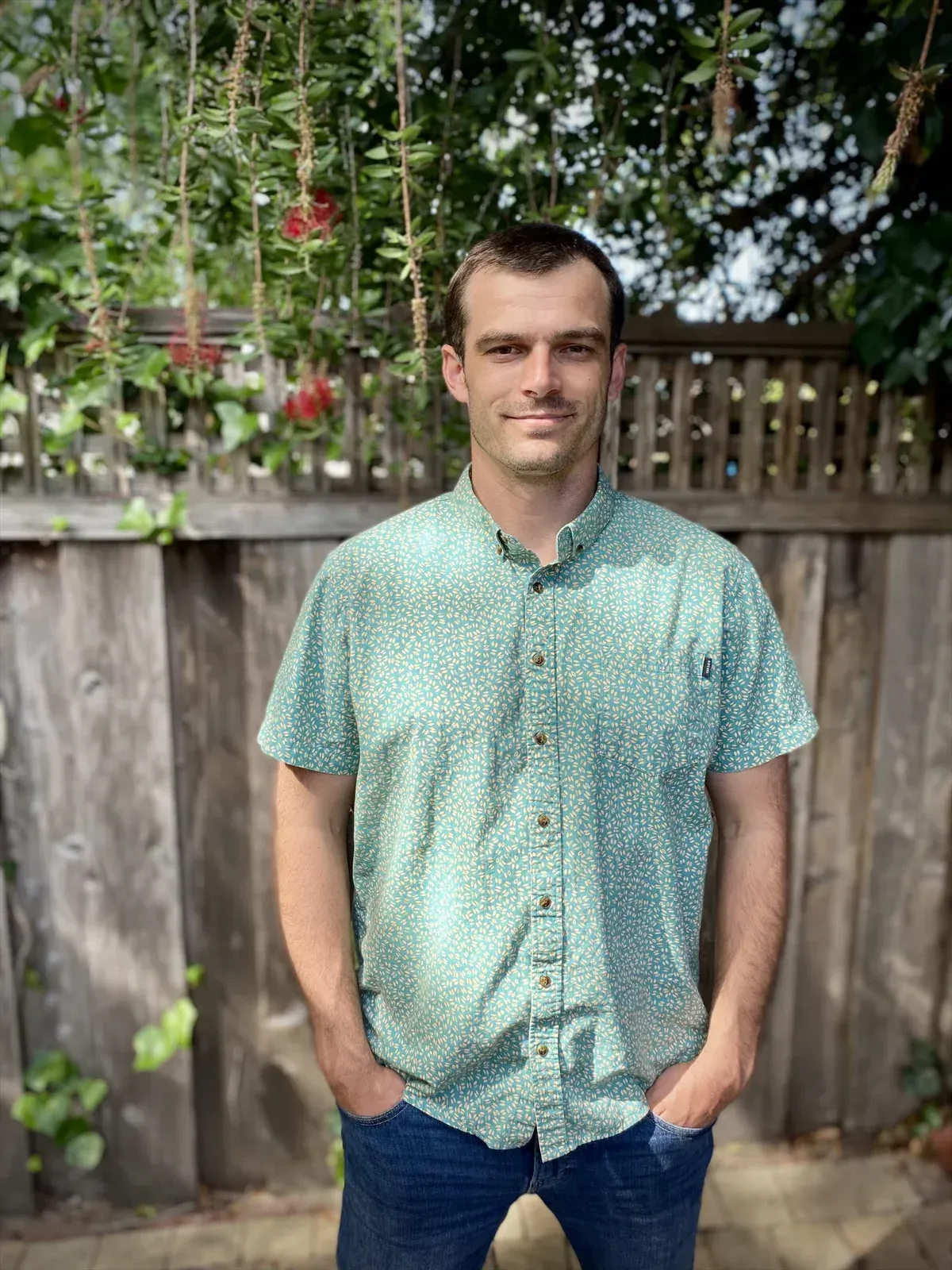
I'm Casey. I'm a remote worker, and for a long time, I thought the problem was me.
I couldn't focus. I'd sit down to work and find myself forty-five minutes deep in a social media rabbit hole I didn't even remember entering. My mornings felt frantic before they'd started. I had this constant low-grade hum of anxiety running underneath everything — like I was always half-waiting for something, always half-distracted.
And then there was the pain.
After the pandemic hit and the world moved inside, I became more glued to screens than I'd ever been in my life. Work was on a screen. Connection was on a screen. Entertainment was on a screen. And slowly, I developed chronic low back pain that I couldn't shake.
I tried everything. Stretches, ergonomic chairs, physiotherapy. Some of it helped. But the pain kept coming back.
What I eventually discovered — and what changed everything — was that my body wasn't just reacting to how I was sitting. It was reacting to how I was living.
The Nervous System Connection Nobody Talks About
Here's what I learned that I wish someone had told me sooner:
Chronic stress keeps your nervous system in a state of high alert. And that state amplifies pain. It even creates pain in the absense of any physical damage.
Every notification ping. Every doomscroll. Every late-night news cycle. Every Instagram comparison. They're not just wasting your time — they're sending micro-doses of stress through your body, hundreds of times a day, keeping your fight-or-flight system quietly activated.
For me, that showed up predominatly as back pain. For you it might be anxiety, brain fog, insomnia, irritability, or just that bone-deep exhaustion that a good night's sleep can't fix.
And here's the thing that really got me:
This is not an accident.
The apps on your phone are engineered by behavioral psychologists and attention scientists whose entire job is to keep you engaged as long as possible. They're not neutral tools. They're built to create compulsive use. The infinite scroll, the variable reward of the like button, the notification that pulls you back in — it's all designed to hijack your nervous system for profit and control in this hyper connected world.
That's when I stopped blaming myself. And started doing something about it.
The Journey Out
I started with small things. Turning off notifications. Getting my phone out of the bedroom. Deleting or adding friction to social media apps.
Then I went deeper. I switched to a privacy-respecting browser. I moved off Google. I started using open source software — tools built by communities of developers who care about what the software does, not how long it can keep you hooked.
I learned about GrapheneOS and moved my phone off Google's and Apple's operating systems entirely. I installed Linux on my laptop. I learned about Bitcoin and why holding your own keys — real financial sovereignty — matters in a world where every transaction is tracked, logged, and used against you.
And somewhere in all of this, I started adding somatic practices. Breathwork. Body scans. Movement. The kind of grounding that helps your nervous system remember it's safe — that you don't have to be on high alert all the time.
The pain started to ease. My focus came back. My mornings felt like mine again.
I realized I wasn't just fixing my tech setup. I was reclaiming my life.
What I Believe
I believe that digital sovereignty is a health issue, not just a privacy preference.
We cannot afford to outsource our attention, our data, our money, and our mental bandwidth to systems designed to extract from us. The cost is too high — measured in anxiety, in lost time, in chronic pain, in disconnection from the people and places and experiences that actually make life worth living.
I also believe that the answer isn't to go off-grid. The goal isn't to throw your phone in a river and move to a cabin. Technology, used intentionally, with the right tools, is one of the most powerful levers in human history. AI, open source software, Bitcoin, the internet — these can give us extraordinary freedom and capability.
But only if we're in the driver's seat.
The goal is more nature, more family, more presence, more freedom — powered by technology that respects us, not technology that controls us.
That's what Digital Vitality means to me.
What I Do
I help remote workers, freelancers, and digital nomads:
- Understand what the attention economy is doing to their nervous systems
- Simplify and detox their digital lives — starting with their phone
- Switch to privacy-first tools — browsers, passwords, email, messaging
- Build a sovereign stack — GrapheneOS, Linux, Bitcoin self-custody, self-hosting
- Develop somatic practices to calm their body and rebuild focus
I do this through a free 5-day email course (the Digital Vitality Reset), a weekly newsletter, and 1:1 coaching for people who want personalized support to transform their digital life from the ground up.
A Note on the Tools I Recommend
Everything I recommend, I use myself.
Bitwarden and Proton for passwords. Proton Mail for email. Brave for browsing. Signal for messaging. GrapheneOS on my phone. Linux on my computer. Bitcoin as money.
I don't recommend things because they pay me to. I recommend them because they've changed my life.
Let's Connect
If this resonates with you — if you're tired of feeling owned by your devices, tired of being tracked and targeted and distracted, tired of chronic screen fatigue — I'd love to hear from you.
Start with the free 5-Day Digital Vitality Reset below. Or if you're ready to go deep, check out 1:1 coaching.
And if you just want to say hi, reply to any of my emails. I read every one.
Here's to less screen, more life.
— Casey
Technology should be a lever, not a leash.